1. The Problem Behind the Connectivity Status
IoT connectivity has become increasingly reliable. Cellular networks, connected routers, and remote connectivity management platforms make it easier to monitor devices deployed across different locations.
But a device can be connected to the network and still not be working properly. For businesses operating remote equipment, this creates a frustrating operational challenge.
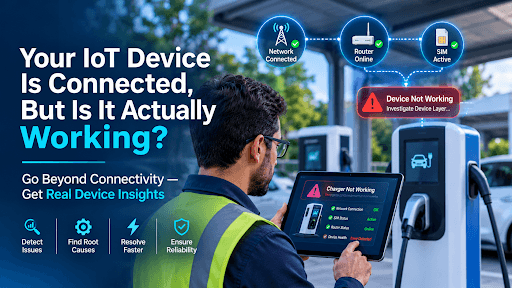
Imagine an EV charging company managing hundreds of charging stations across multiple locations. A charging station stops responding to customer requests. The connectivity platform shows that the router is online, the SIM is active, and network connectivity appears normal. So why is the charger not working?
- The charging controller may have stopped responding.
- An internal communication process may have failed.
- The device application may have become unresponsive.
- A firmware issue may be affecting normal operation.
- Communication between internal components may have been interrupted.
Network visibility does not explain everything
The connectivity provider can confirm that the network connection is available, but that does not necessarily explain what is happening inside the connected equipment. This creates a gap between network visibility and actual device health.
2. Why Remote Device Troubleshooting Becomes Expensive
When technical teams cannot identify the problem remotely, they often depend on manual troubleshooting or field technicians. For companies managing geographically distributed equipment, this can mean:
- Unnecessary site visits.
- Longer equipment downtime.
- Increased maintenance costs.
- Repeated troubleshooting by support teams.
- Delayed service restoration.
The challenge may be inside the device
The challenge is not always restoring connectivity. Sometimes the connection is perfectly fine. The real challenge is identifying and resolving the problem within the connected device.
3. Move Beyond Connectivity Monitoring
An AI-powered intelligence layer can help bridge this gap by analyzing information beyond basic connectivity status. By correlating network events, device telemetry, application logs, and historical behavior, it can help technical teams:
- Identify the actual problem by distinguishing network-related failures from issues within connected equipment.
- Detect abnormal behavior even when network connectivity remains available.
- Improve remote diagnostics and investigate potential root causes without relying entirely on manual investigation.
- Recommend corrective actions and guide support teams toward appropriate troubleshooting steps.
- Automate recovery by triggering approved remote actions through APIs and existing integrations.
Investigate before dispatching
This helps businesses investigate problems more intelligently before deciding whether physical intervention is necessary.
4. Connectivity Is Only One Part of IoT Reliability
As IoT deployments expand, simply knowing whether a device is connected is no longer enough. Connectivity providers and IoT solution operators need deeper visibility into the equipment, applications, and systems operating behind that connection.
An AI intelligence layer can complement existing connectivity management platforms, helping businesses move from monitoring network availability to understanding overall device health.
Because an online connection does not always mean an operational device.