1. When Network Visibility Doesn't Tell the Whole Story
LoRaWAN has become an important technology for connecting large numbers of low-power IoT devices across smart cities, utilities, agriculture, and industrial monitoring.
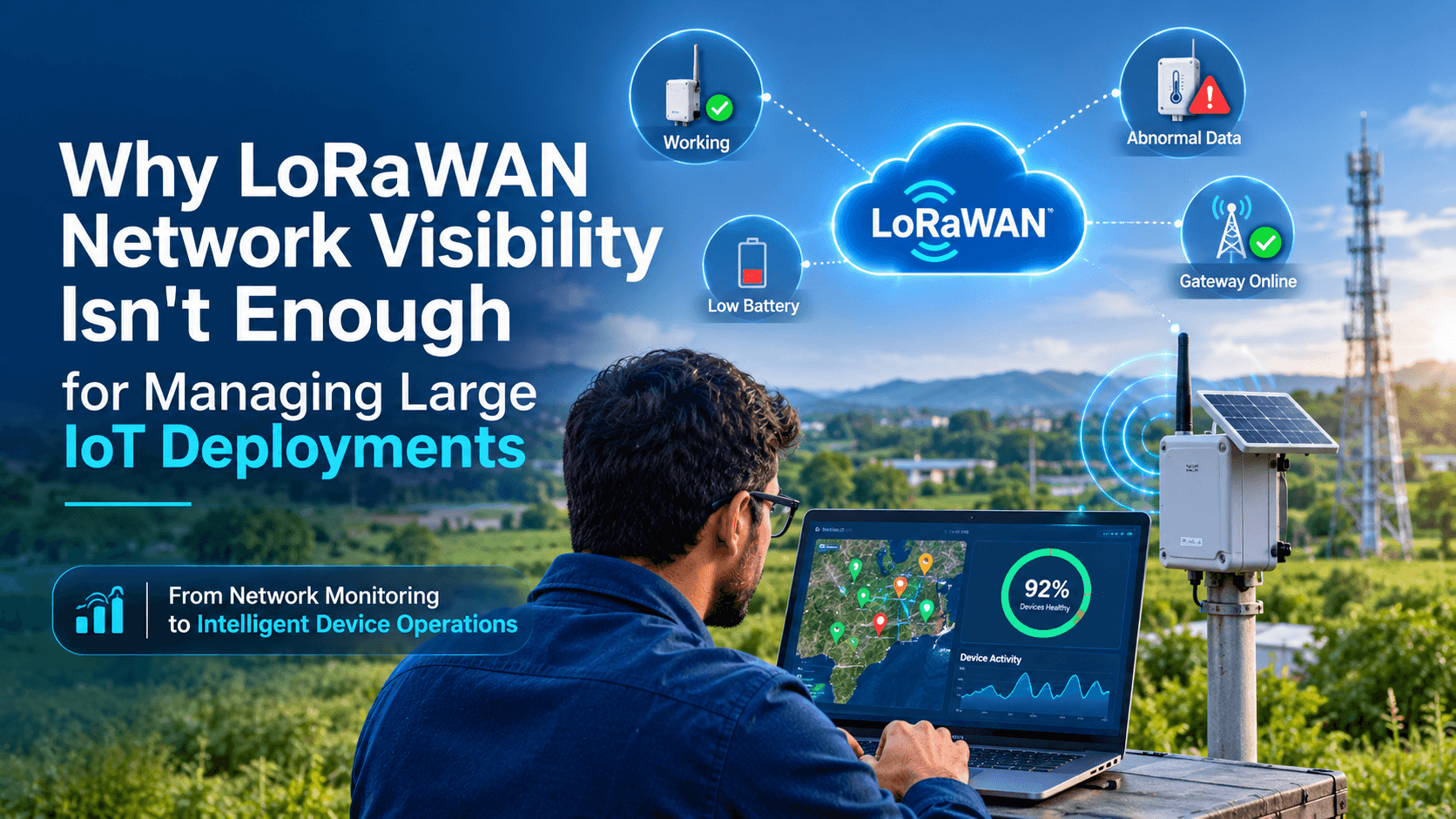
With LoRaWAN network servers, operators can manage gateways, monitor device communication, and process data from thousands of connected devices. But as deployments expand, managing network connectivity is only part of the challenge. The bigger challenge is understanding what is happening across the devices themselves.
Imagine a LoRaWAN solution provider managing thousands of sensors across multiple customer sites. Some devices stop reporting data, others transmit irregular readings, and a few experience repeated communication failures.
- Is a sensor experiencing a battery-related issue?
- Is the device located in an area with poor radio coverage?
- Is the gateway experiencing intermittent connectivity?
- Has the device developed an internal fault?
- Is abnormal behavior caused by firmware or application logic?
- Are there patterns that may indicate a potential device failure?
Similar symptoms can have different causes
Operations teams may have network-server information, gateway status, and device communication records, but identifying the reason behind each issue can require additional investigation. These problems can look similar operationally while needing completely different solutions.
2. The Challenge of Troubleshooting at Scale
When managing a small number of devices, manual investigation may be manageable. With thousands of devices distributed across different locations, troubleshooting every issue individually becomes difficult.
Technical teams may need to review historical messages, compare device behavior, investigate gateway events, and coordinate with field technicians. This can increase resolution times and make proactive maintenance harder.
The challenge is not simply collecting more data. It is making sense of the data already available.
3. Bring AI Intelligence into LoRaWAN Operations
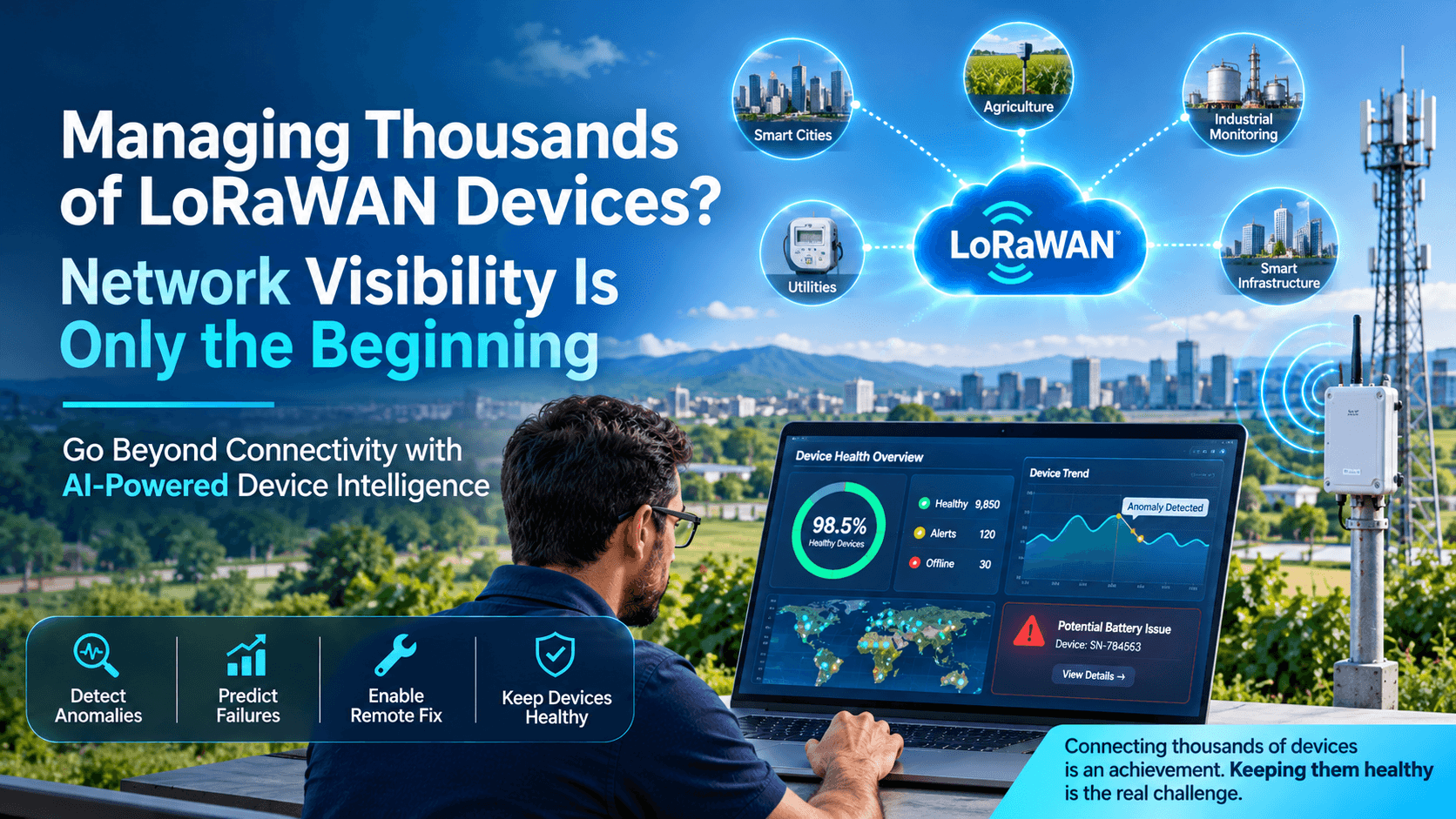
An AI intelligence layer can complement an existing LoRaWAN network server by analyzing device telemetry, network events, logs, and historical behavior together. This helps operators move beyond basic connectivity monitoring and can support:
- Intelligent root-cause analysis by correlating multiple data sources to identify potential reasons behind device failures.
- Anomaly detection to identify unusual communication patterns and unexpected device behavior.
- Predictive maintenance by recognizing early indicators of potential device or operational problems, where suitable data is available.
- Remote troubleshooting with insights and recommended actions before sending technicians to the field.
- Automated resolution through approved corrective actions using available APIs and integrations.
Focus attention where it matters
Rather than manually investigating every device issue, teams can prioritize problems based on operational impact and potential causes.
4. Make LoRaWAN Deployments More Intelligent
The success of a LoRaWAN deployment is not measured only by the number of devices connected or the coverage achieved. It also depends on how reliably those devices perform over time and how quickly operational issues can be identified and resolved.
For LoRaWAN network operators and solution providers, an AI intelligence layer offers a way to extend existing infrastructure with deeper device-level insights.
Connecting thousands of devices is an achievement. Keeping thousands of devices healthy is the real operational challenge.