1. The Hidden Challenge Behind LoRaWAN Deployments
LoRaWAN has made it possible to connect thousands of IoT devices across large geographical areas with relatively low power consumption and operating costs. From smart metering and agriculture to industrial monitoring and smart cities, it is helping businesses scale their deployments.
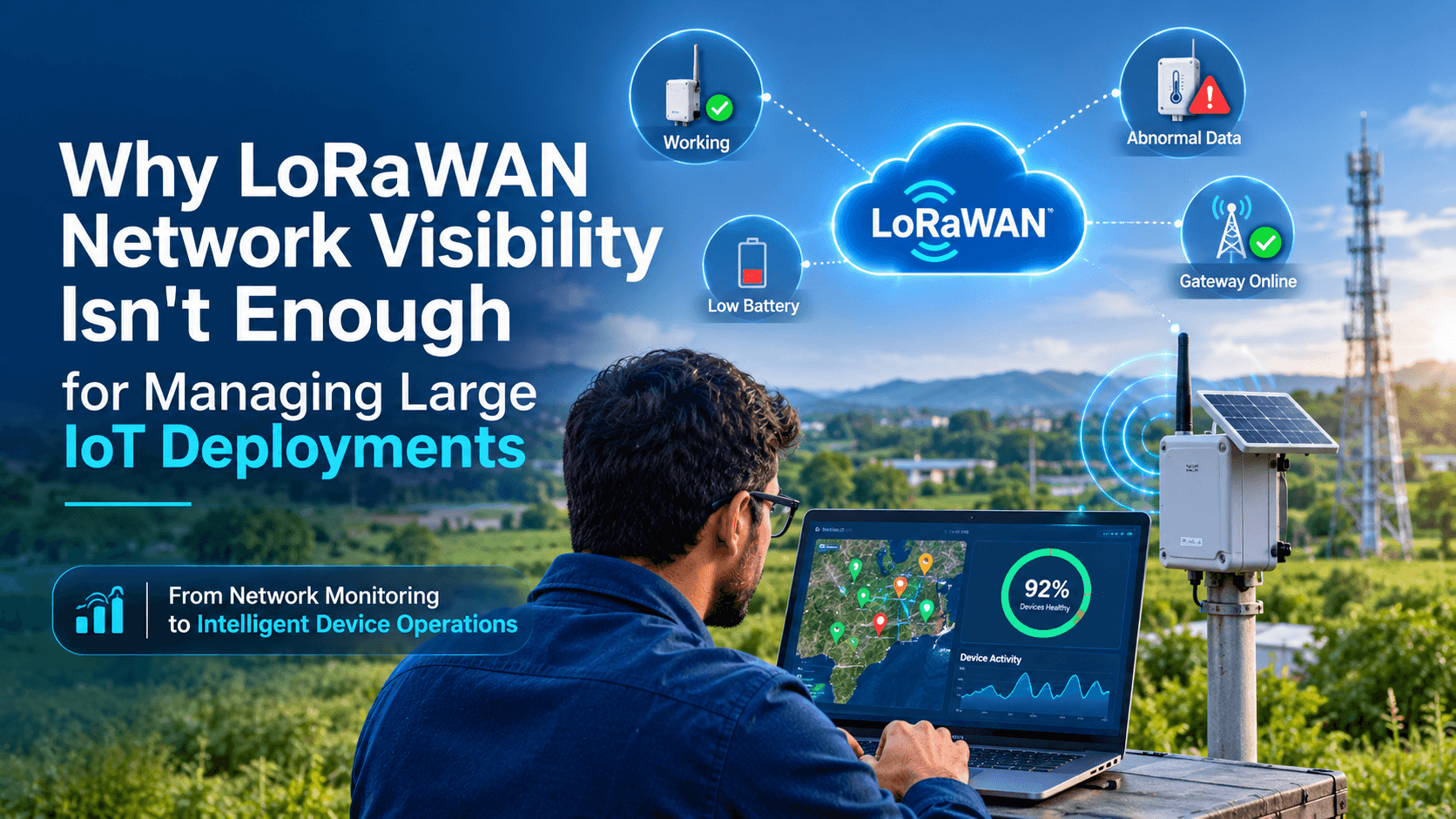
As deployments grow, a different challenge emerges: knowing whether devices are actually working as expected. A gateway can be online and the network server can be operating normally, yet individual devices may stop transmitting data, report abnormal readings, or behave unexpectedly.
And identifying why is not always straightforward.
2. Investigating Issues Across Remote Devices
Consider an IoT solution provider managing thousands of remote sensors across multiple locations. When a sensor stops reporting data, the operations team may need to investigate several possibilities:
- Is the device experiencing a battery-related issue?
- Could poor signal conditions be affecting it?
- Is the gateway experiencing connectivity problems?
- Has the device stopped transmitting?
- Could there be a firmware or configuration issue?
- Is the sensor reporting incorrect or abnormal data?
Network information is only part of the picture
Network monitoring tools provide valuable information about gateways, packets, and connectivity. Understanding the condition of an individual device may require combining information from multiple sources.
For remote deployments, that can lead to lengthy investigations, delayed maintenance, and unnecessary site visits.
3. Why Network Monitoring Alone Is Not Enough
Traditional monitoring helps operators understand what is happening at the network level. Large-scale IoT operations also need visibility beyond network availability.
A sensor might still communicate with the network while gradually developing abnormal behavior. A battery-powered device might show declining performance before it stops reporting altogether.
Without analyzing device telemetry, historical behavior, and network events together, early warning signs can be missed. This is where an AI-powered intelligence layer can help.
4. Bring Intelligence into LoRaWAN Operations
An AI intelligence layer can work alongside existing LoRaWAN network servers and IoT platforms, using available telemetry, APIs, and event data to provide deeper operational insights. It can help teams:
- Detect abnormal device behavior by identifying unusual reporting patterns and unexpected changes in performance.
- Improve root-cause analysis by correlating network events, device telemetry, and historical data to identify potential causes.
- Recognize patterns that may indicate battery degradation, communication problems, or device failures, where suitable data is available.
- Reduce unnecessary site visits by helping technical teams investigate issues remotely before dispatching field technicians.
- Support automated recovery by triggering appropriate corrective actions through existing integrations and APIs where supported.
Prioritize issues with more context
Instead of investigating every issue manually, operations teams can use AI-assisted insights to prioritize problems and respond more effectively.
5. The Next Step in LoRaWAN Operations
Scaling a LoRaWAN network is not just about connecting more devices and expanding coverage. It is also about maintaining the health, reliability, and performance of those devices throughout their operational lifecycle.
For LoRaWAN network operators and IoT solution providers, adding an AI intelligence layer creates an opportunity to move beyond network monitoring toward more informed device operations.
A healthy network does not always mean healthy devices. Understanding the difference is essential to scaling reliable IoT deployments.