1. The Problem Goes Beyond Connectivity
IoT Connectivity Management Platforms (CMPs) have made it easier for businesses to manage SIMs, monitor data usage, track connectivity, and control large device fleets. But there is still a major operational challenge: knowing why an IoT device is actually failing.
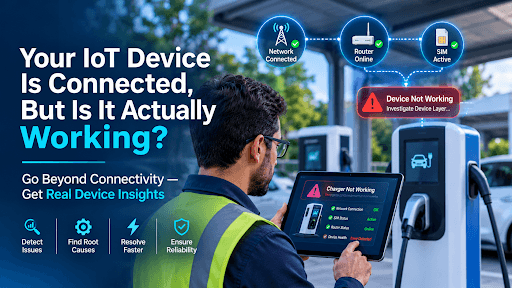
A SIM may appear active. Network connectivity may look normal. Data usage may be within limits. Yet the device itself could be offline, malfunctioning, or failing to send data.
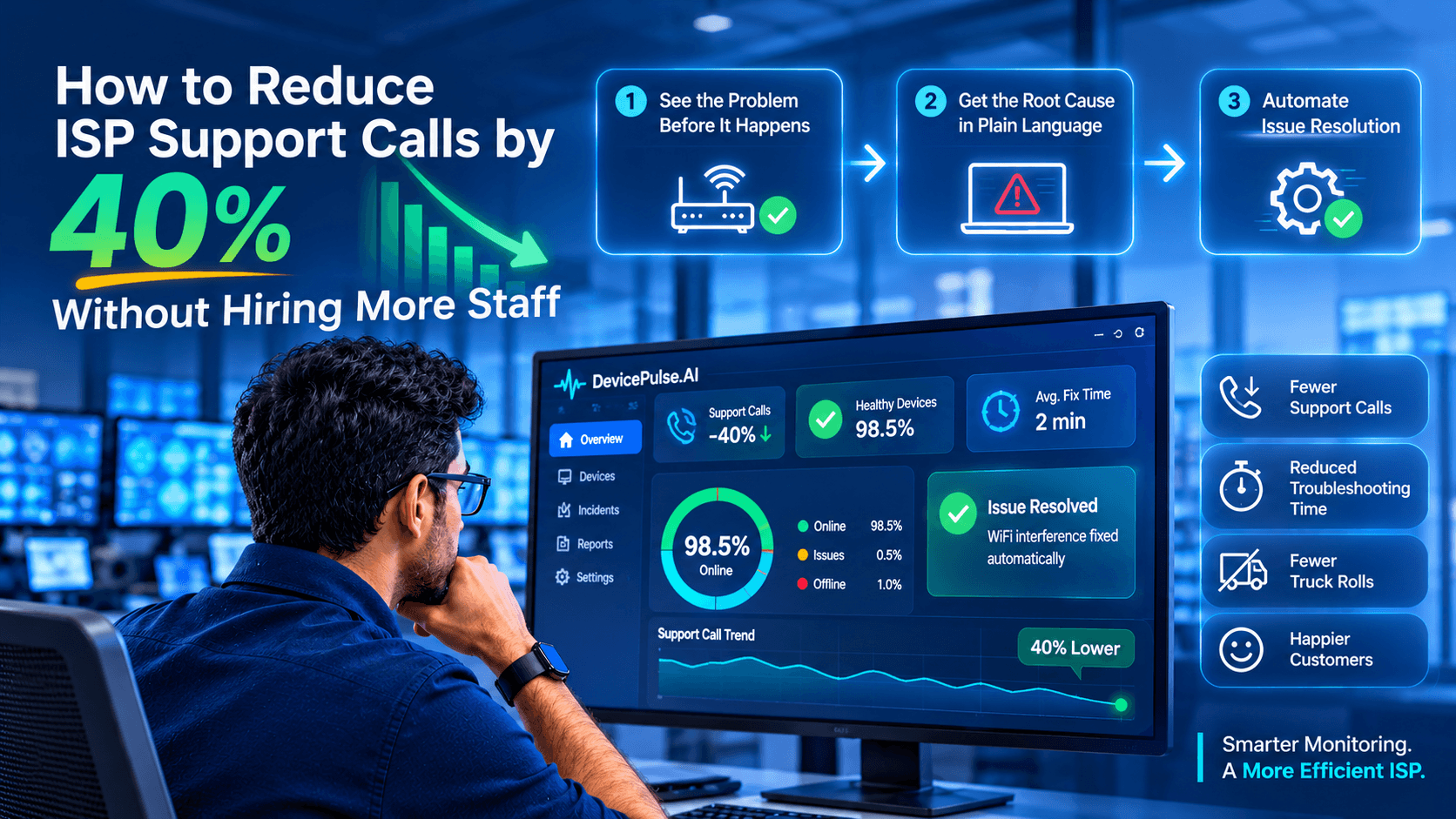
Similar challenges affect ISPs, where limited visibility into connected devices can lead to repeated troubleshooting and increased customer support calls. This creates a visibility gap between knowing that a device can connect and knowing whether it is operating as expected.
2. Investigating an IoT Device Means Looking Beyond the SIM
Consider an IoT solution provider managing thousands of connected devices across multiple customer environments. When a customer reports that a device has stopped working, the support team may need to investigate several layers:
- Is the SIM connected to the network?
- Is the device communicating with the cloud?
- Could there be a firmware issue?
- Is the device showing abnormal behavior?
- Is an application or API integration failing?
The operational cost of fragmented visibility
A CMP may provide connectivity information, but identifying the actual root cause often requires additional investigation across multiple systems. For support teams, that means more troubleshooting time, repeated customer interactions, and sometimes unnecessary field visits.
This is particularly challenging for businesses managing remote connected equipment: a device can remain connected to the network and still fail to operate as expected.
3. Why Connectivity Visibility Alone Is No Longer Enough
As IoT deployments grow, manually investigating every device issue becomes increasingly difficult. Connectivity providers need to move beyond showing whether a device is connected or disconnected.
They need intelligence that can correlate connectivity events with device telemetry, logs, firmware history, and application-level information. This is where an AI intelligence layer can add value.
4. Move from Connectivity Monitoring to Intelligent IoT Operations
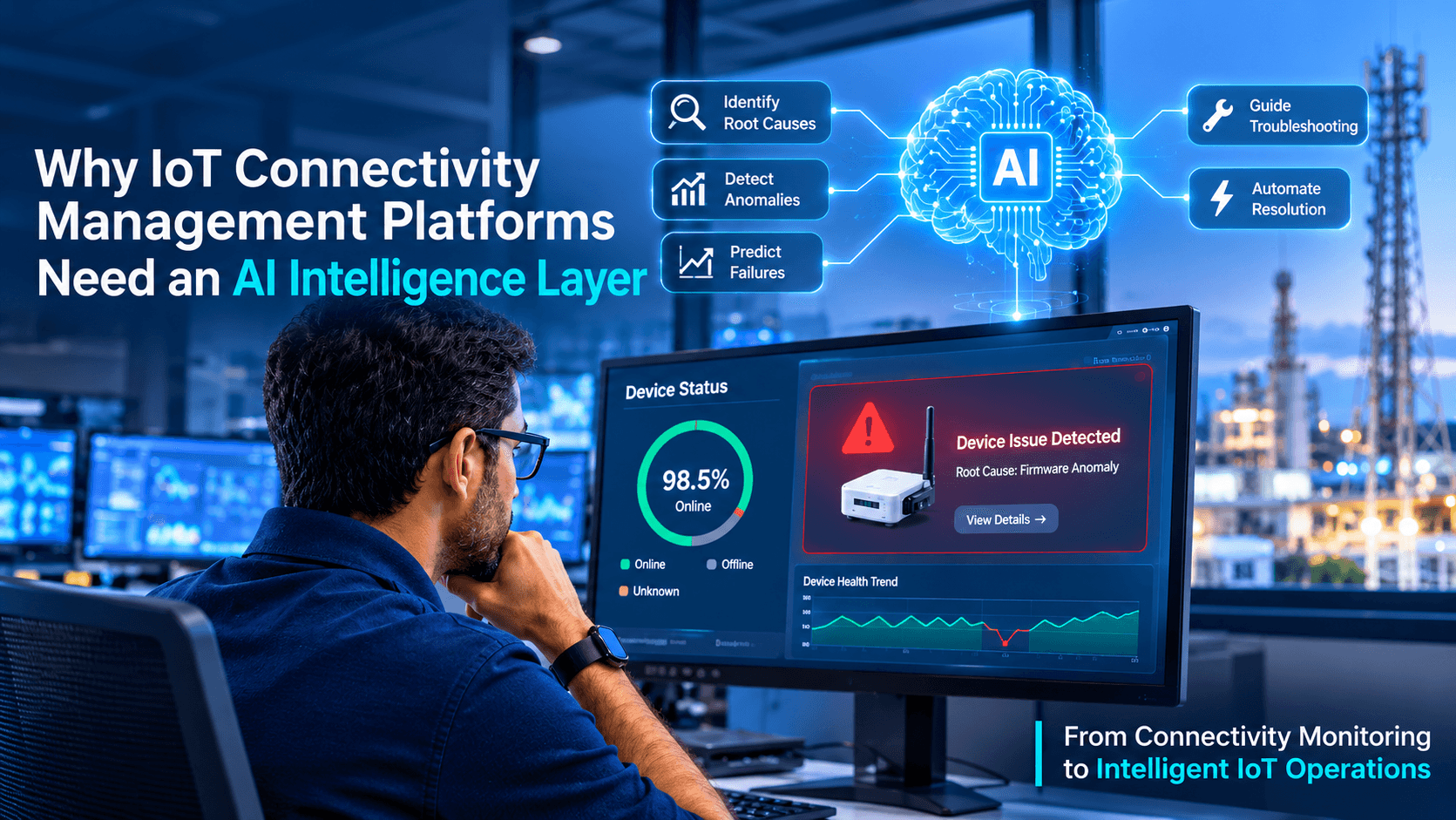
An AI-powered intelligence layer can work alongside an existing CMP without replacing the underlying connectivity management system. Depending on available data, integrations, and configured capabilities, it can help teams:
- Identify potential root causes by correlating information from different systems.
- Detect anomalies by recognizing unusual device behavior before it develops into a larger operational issue.
- Identify patterns that may indicate potential device or connectivity failures, where suitable data is available.
- Guide troubleshooting with actionable recommendations for support teams.
- Automate approved corrective actions through existing APIs and integrations.
A more complete operational view
The result is a shift from reactive troubleshooting toward more proactive and intelligent IoT operations. Connectivity status remains useful, but teams can consider it alongside device and application context to decide what to investigate next.
5. The Next Evolution of IoT Connectivity Platforms
The future of IoT connectivity management is not just about managing more SIMs or connecting more devices. It is about helping customers understand, diagnose, and resolve problems across their entire IoT environment.
For CMP providers and IoT connectivity companies, an AI intelligence layer creates an opportunity to deliver greater value without replacing the platforms and infrastructure they have already built.
Connectivity tells you whether a device is connected. Intelligence helps you understand whether it is actually working.