1. Why Reliable Connectivity Is No Longer Enough
Healthcare connectivity providers establish an important foundation through managed networks, Wi-Fi, cellular coverage, and infrastructure services. As connected environments grow, devices may remain connected while sending incomplete data, reporting abnormal measurements, or experiencing technical issues that need investigation.
This is where healthcare IoT monitoring and device-level operational intelligence become important.
2. The Hidden Operational Gap in Healthcare Connectivity
Network monitoring helps teams understand connectivity, coverage, bandwidth, and network performance. Device-level monitoring focuses on the condition and behavior of individual devices using the data and diagnostic information those devices expose.
A connected sensor may remain reachable while it stops reporting expected measurements. Other examples include intermittent disconnections, values outside configured thresholds, unexpected behavior after a firmware or configuration change, recurring gateway communication issues, or device faults despite normal network connectivity.
Without sufficient device-level visibility, teams may struggle to distinguish a network problem from a device problem.
- Devices intermittently disconnecting or stopping telemetry.
- Sensors reporting values outside configured operating thresholds.
- Unexpected behavior following firmware or configuration changes.
- Gateways experiencing recurring communication issues.
- Device faults requiring investigation despite normal network connectivity.
3. Why Healthcare IoT Needs Context-Aware Intelligence
Monitoring assumptions should reflect the device and the environment. A connected sensor in a patient room may have different operating requirements from a gateway in a communications cabinet, and a recurring fault affecting a critical workflow may need a different response from a low-priority asset issue.
When available and properly configured, context can help technical teams investigate issues and prioritize response. An actionable alert should identify the affected device, abnormal metric, event time, and relevant diagnostic history.
- Device location and the environment it serves.
- Previous alerts, incidents, and recurring technical issues.
- Relevant environmental measurements and expected operating ranges.
- Firmware or configuration changes and their relationship to subsequent behavior.
- Operational criticality of the affected device or workflow.
4. How DevicePulse.AI Complements Healthcare Connectivity Platforms
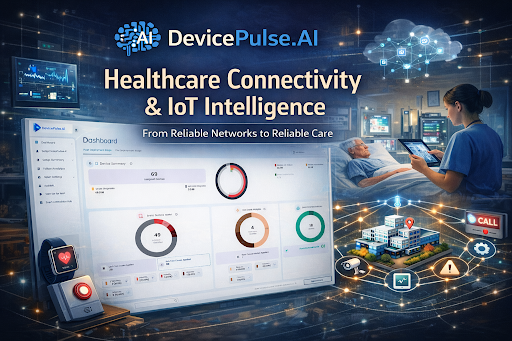
DevicePulse.AI, part of SenzMate's AIoT platform, focuses on connected-device visibility and AI-assisted operational workflows. It complements network monitoring by helping teams investigate device-level behavior using available device data and operational context.
Depending on deployment, supported integrations, and accessible telemetry, workflows can include AI-assisted troubleshooting using device history and knowledge-base information, device-health monitoring, actionable alerts, operational history, and fleet-level insights.
These capabilities complement network availability monitoring; they do not replace clinical monitoring systems, medical-device safety controls, or manufacturer-approved maintenance procedures.
- AI-assisted troubleshooting using available device history and relevant knowledge.
- Monitoring supported device metrics and events to identify abnormal behavior.
- Configured alerts that bring relevant events to technical teams.
- Operational history that helps investigate recurring problems.
- Fleet-level visibility to compare patterns across devices and locations.
5. From Network Uptime to Device-Level Visibility
Network monitoring asks whether the network is available, connectivity stable, and bandwidth or coverage meeting requirements. Device-level monitoring asks whether devices report expected data, monitored metrics remain within configured thresholds, and unusual behavior has occurred.
Operational intelligence connects relevant information to troubleshooting so teams can understand incidents and determine appropriate next steps. Together, these capabilities provide a more complete view than network visibility alone.
Exact benefits depend on integration between network infrastructure, connected devices, monitoring systems, and the teams responsible for maintenance.
6. Why This Matters for Healthcare Connectivity Providers
Device-level operational intelligence can complement the infrastructure connectivity providers already maintain. Potential opportunities include a more complete service offering, more informed technical support, consistent troubleshooting, improved fleet visibility, and differentiated managed services where technical capabilities and commercial arrangements are in place.
Evaluate these opportunities against customer environments, device compatibility, data access, and service requirements.
7. Looking Ahead: Predictive Maintenance for Healthcare IoT
Where sufficient historical and real-time data is available, analytical models may identify patterns associated with developing problems and help teams decide when further investigation is warranted.
Predictive maintenance depends on available data, validated models, equipment compatibility, and reliable patterns. For medical devices, it must complement manufacturer guidance, qualified servicing, and applicable safety and regulatory requirements. Predictive insights should inform decisions, not replace professional assessment or guarantee that failures can be prevented.
8. From Reliable Networks to More Informed Healthcare Operations
Reliable connectivity remains essential, but network availability alone cannot explain every operational issue. Healthcare organizations also need appropriate visibility into device behavior, actionable diagnostic information, and consistent troubleshooting processes.
DevicePulse.AI supports this broader operational approach through connected-device monitoring and AI-assisted troubleshooting. Device-level intelligence can complement existing network services when it fits the environment, integrations, and operational workflows.